The 1-Second Rule: Why Slow Load Times Are Quitely Killing Your Google Ads Conversions (And Your Budget)
If your landing page takes 5 seconds to load, you’re not “a little slower”. You’re losing
the majority of people who clicked your ad before even see your offer.
The uncomfortable truth: speed is a conversion lever
Rehab marketing is one of the most expensive categories in Google Ads, and the stakes are high. When someone clicks your ad, they’re usually in a high-intent moment, either a potential patient or a family member trying to get help fast.
That’s why page speed isn’t “technical hygiene.” It’s part of trust, credibility, and whether people stick around long enough to call.
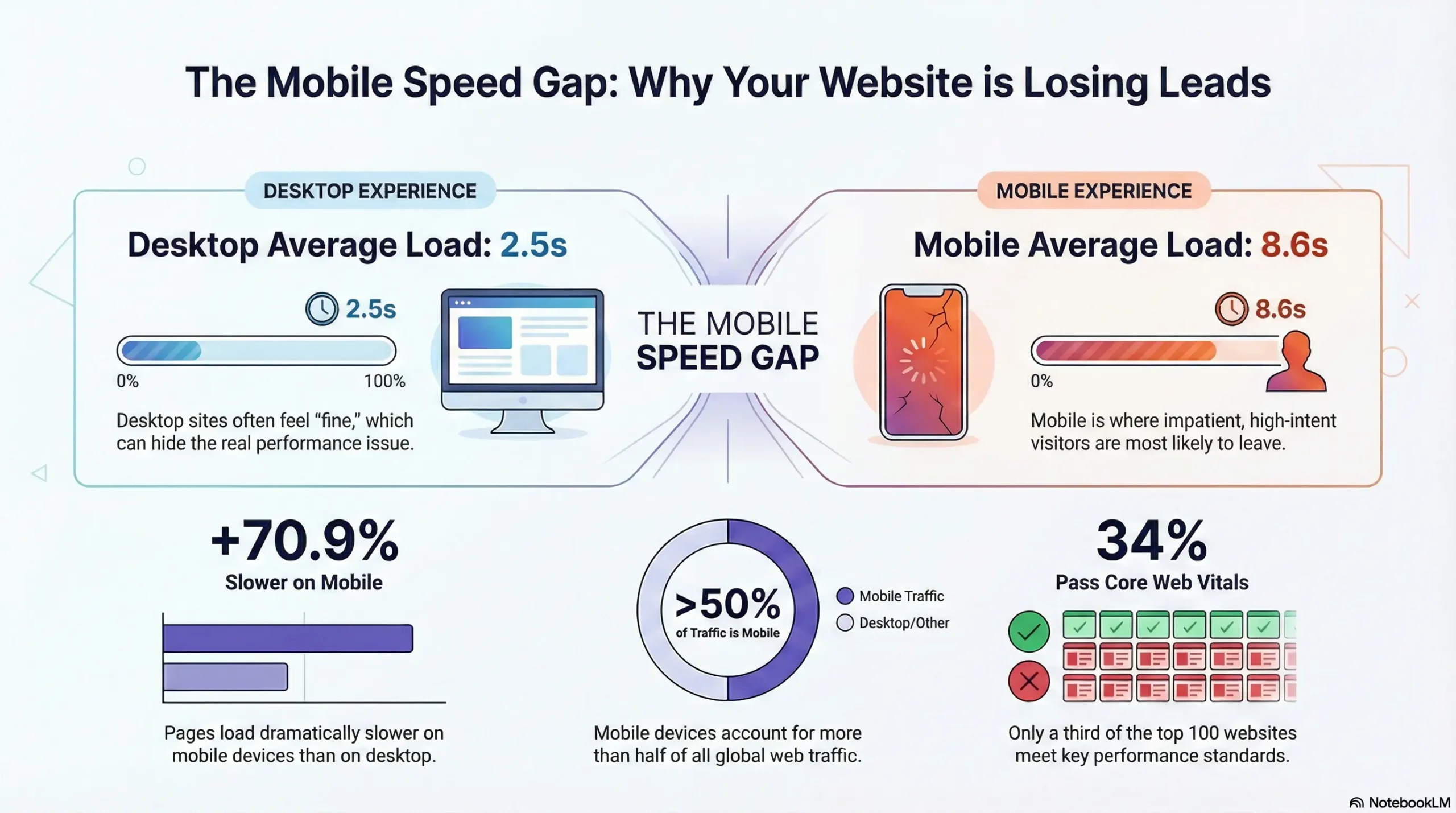
Google found bounce probability increases 32% when load time goes from 1s to 3s. In other words: the slower your page gets, the more people leave before taking action. (Google/SOASTA Research)
Let’s make this real: what happens with 100 clicks?
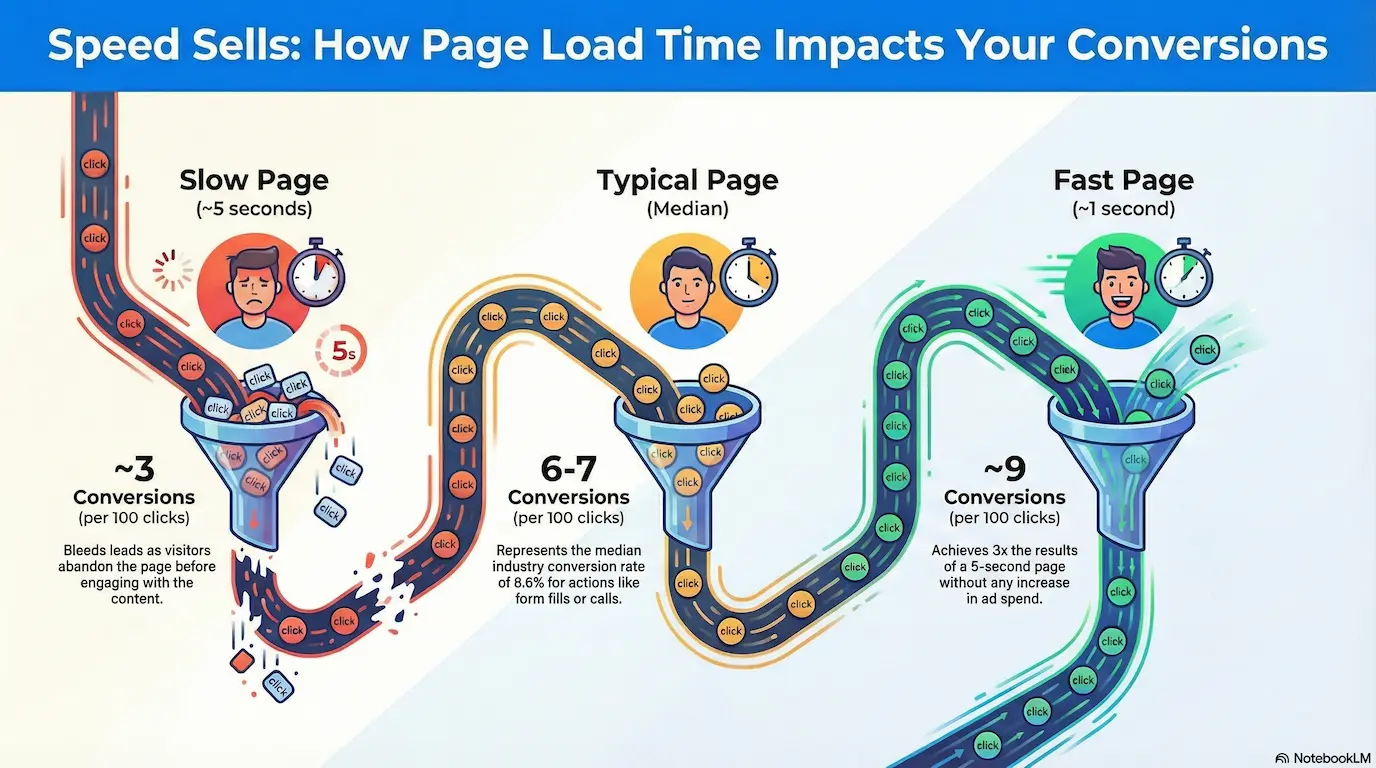
Stats get confusing fast, so here’s a simple mental model. Imagine 100 people click your Google Ads landing page.
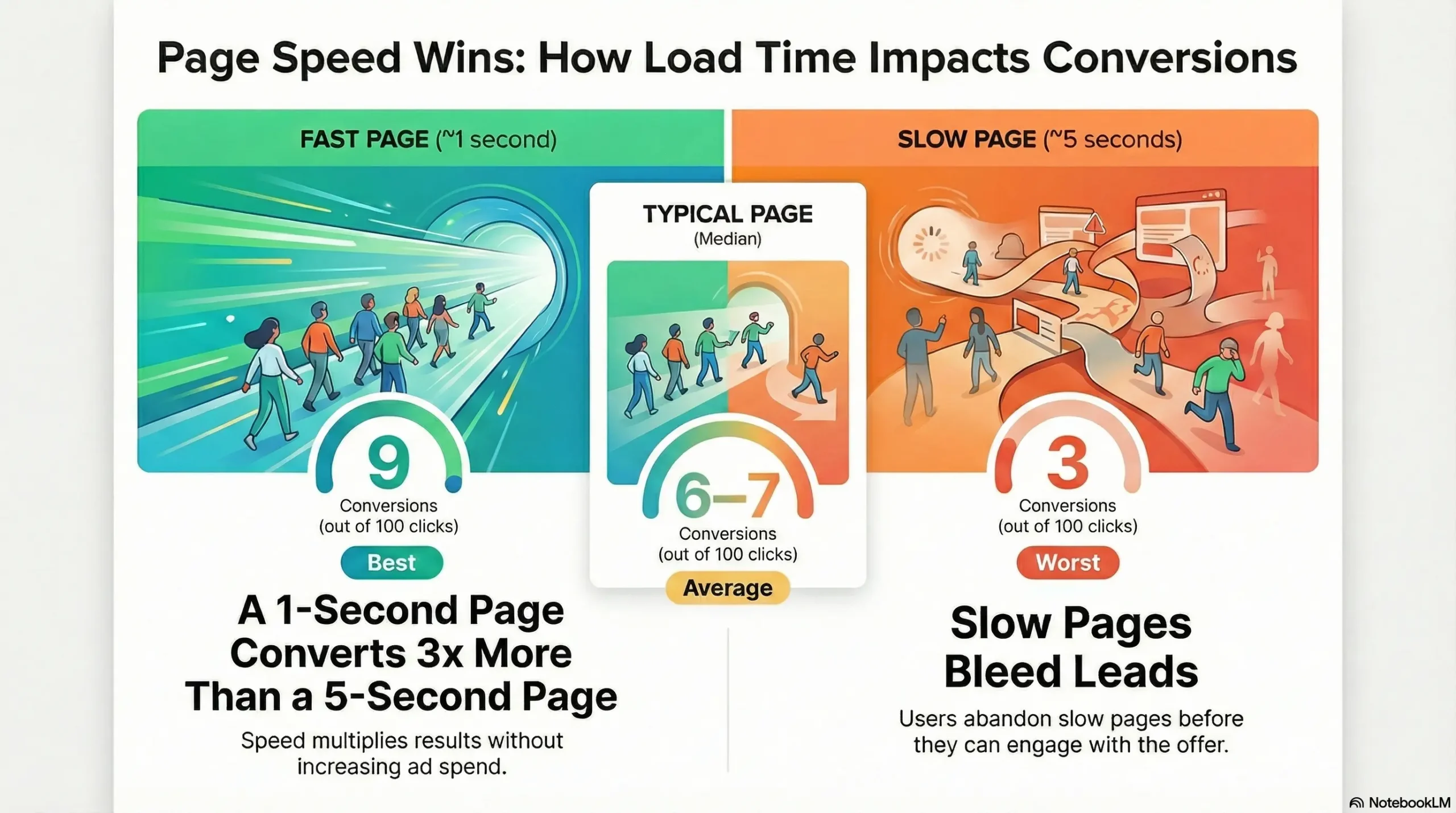
Translation: Going from 1s to 5s isn’t “a little worse.” It can be the difference between 9 conversions and 3 conversions per 100 clicks. That’s the same budget producing radically different outcomes.
Here’s the breakdown (so it’s impossible to ignore)
| Scenario | What happens out of 100 clicks | Why it matters |
|---|---|---|
| Typical landing page (median) | ~6–7 conversions | That’s the median conversion rate across industries: 6.6%. This could be a form submit, call, or booking depending on what you track. |
| Fast page (~1 second) | ~9 conversions (illustrative) | If a 1-second page converts at 3x the rate of a 5-second page, you’re multiplying results without increasing ad spend. |
| Slow page (~5 seconds) | ~3 conversions (illustrative) | Same traffic, same ad budget, but the page is bleeding leads because people abandon before engaging. |
Now the part that hurts: what this means for a $50,000/month rehab ad budget
You asked for numbers. Here they are, with simple math and no marketing fluff.
$50K/month spend: Leads + Cost Per Lead by Page Speed
Using the “100 clicks” conversion outcomes: Fast = 9%, Typical = 6.6%, Slow = 3%. Assumed average CPC = $20.
Clicks = $50,000 ÷ $20 = 2,500
Leads = clicks × conversion rate → Fast: 2,500×9%=225 | Typical: 2,500×6.6%=165 | Slow: 2,500×3%=75
CPL = $50,000 ÷ leads → Fast: $222 | Typical: $303 | Slow: $667
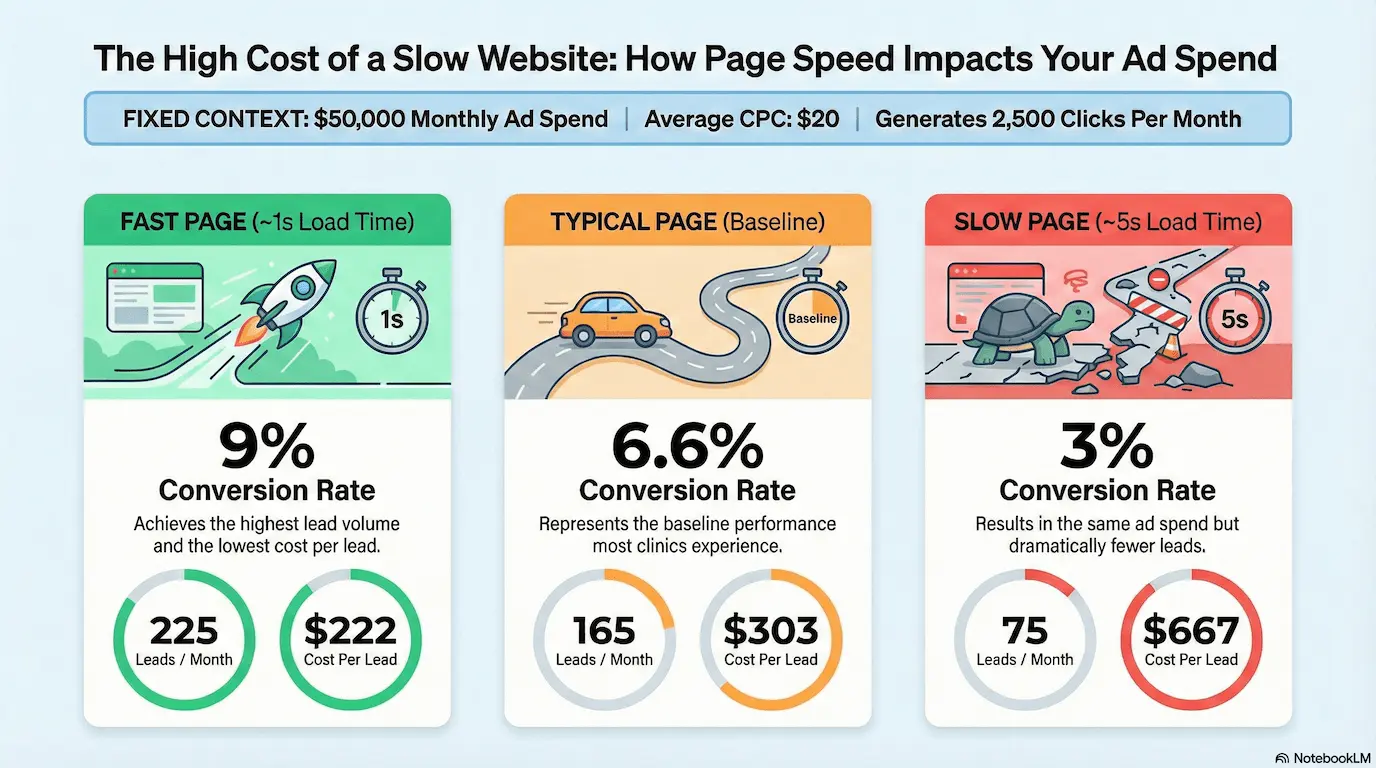
This visual exists for one reason: to show how a faster landing page can dramatically improve results versus a slower one, even when your traffic and budget stay exactly the same.
Why rehab landing pages get hit harder than most industries
In rehab marketing, clicks aren’t casual browsing. People are often stressed, emotional, and trying to make a decision quickly. Your page speed becomes a trust signal whether you like it or not.
- Slow pages feel unsafe. If the site doesn’t load, people assume the program isn’t reliable.
- Mobile makes it worse. Many visitors are on phones, and delays cause rapid abandonment.
- Every second adds drop-off. Google’s research shows bounce probability climbs fast as load time increases.
Simple takeaway: If your ad costs are premium (rehab is), your speed needs to be premium too.
Quick speed wins (that actually move the needle)
If you want to improve conversions without increasing ad spend, start here:
1) Compress + convert images
Use modern formats (WebP/AVIF) and don’t upload 4000px images to a 900px container.
2) Cut unnecessary scripts
Every tracker and widget adds delay. Keep what drives revenue, remove what just “looks helpful.”
3) Improve server response time
Hosting, caching, and CDN setup matter. A fast design on a slow server still loses.
4) Test with real tools
Use Google PageSpeed Insights + Core Web Vitals to find bottlenecks and measure improvement.
One final reality check: You can’t “optimize your ads” into profitability if the page experience is slow. You’re paying for clicks your site can’t hold.
- Compress hero images
- Use a CDN
- Reduce heavy scripts
- Remove unused JavaScript
- Delay non-critical scripts until after load
- Avoid bloated tracking stacks
- Set explicit image dimensions
- Reserve space for embeds
- Avoid late-loading banners pushing content down
Want us to estimate your exact speed waste?
If you’re spending serious money on Google Ads, page speed is either printing conversions… or quietly burning your budget. We can model the impact based on your real click volume, CPA, and call-to-admission rates.
Get a Speed + Conversion Audit-
HubSpot: “A B2B site that loads in 1 second has a conversion rate 3x higher than a site that loads in 5 seconds.”
https://blog.hubspot.com/marketing/page-load-time-conversion-rates -
BrowserStack (Portent research summary): “Conversion rate drops ~4.42% per second in the first 5 seconds.”
https://www.browserstack.com/guide/how-fast-should-a-website-load -
Unbounce Conversion Benchmark Report: “The median conversion rate across all industries is 6.6%.”
https://unbounce.com/conversion-benchmark-report/ -
Think with Google (SOASTA Research): “Bounce probability increases 32% as page load time goes from 1s to 3s.”
https://www.thinkwithgoogle.com/marketing-strategies/app-and-mobile/page-load-time-statistics/ -
BigCommerce: “A one-second delay can cause a 7% loss in conversion.”
https://www.bigcommerce.com/glossary/page-load/
Note: Speed-to-conversion relationships vary by traffic source, device, offer, and market. The direction is consistent: slower pages bleed conversions, and high-CPC industries feel it the most.